
Letter to the Auditor-General regarding the LNG facility procurement process
Alongside other organisations, we’ve written to the Auditor-General to raise our concerns about the ongoing procurement process for the liquefied natural gas (LNG) import facility, and to request that an inquiry be initiated. In short this is because of the following reasons:
Unwarranted urgency: The urgency of decision-making and procurement is not warranted, particularly when there are clear questions regarding value for money, and there are significant concerns within the local community;
Value for money has not been demonstrated: Including that lower cost alternatives have not been fully considered; it is unclear if the LNG import facility will actually reduce electricity prices; and the potential chilling effect on the energy transition and impact on international obligations has not been fully considered;
Unacceptable cost risk: Committing to a contract prior to securing the necessary regulatory approvals (whether via enabling legislation or existing processes) and prior to putting in place a cost recovery model in an election year creates unacceptable cost risk for New Zealand and for the project; and
Inadequate consultation to date: The local community has not been provided with sufficient information and has not been adequately consulted during the procurement process.
Why does this matter?
This is a project of up to $2.7 billion by the Government's own assessment, with considerable safety and environmental implications. Yet the Government has not comprehensively engaged with these concerns, and information has been hard to obtain. For example, we waited four months for a response to an Official Information Act request, following a complaint to the Ombudsman.
The decision-making and procurement process for the LNG import facility has been unnecessarily lacking in transparency and rushed towards an artificial deadline. The Government has consistently said that it intends to sign a contract in mid-2026, though recent statements indicate that this timeline may have slipped to sometime this year.
Transparency helps build trust and confidence in how public procurement is carried out. A lack of transparency in this decision-making and subsequent procurement processes, particularly in a matter of such high public interest, has not led to public confidence in the decision-making and subsequent procurement process.
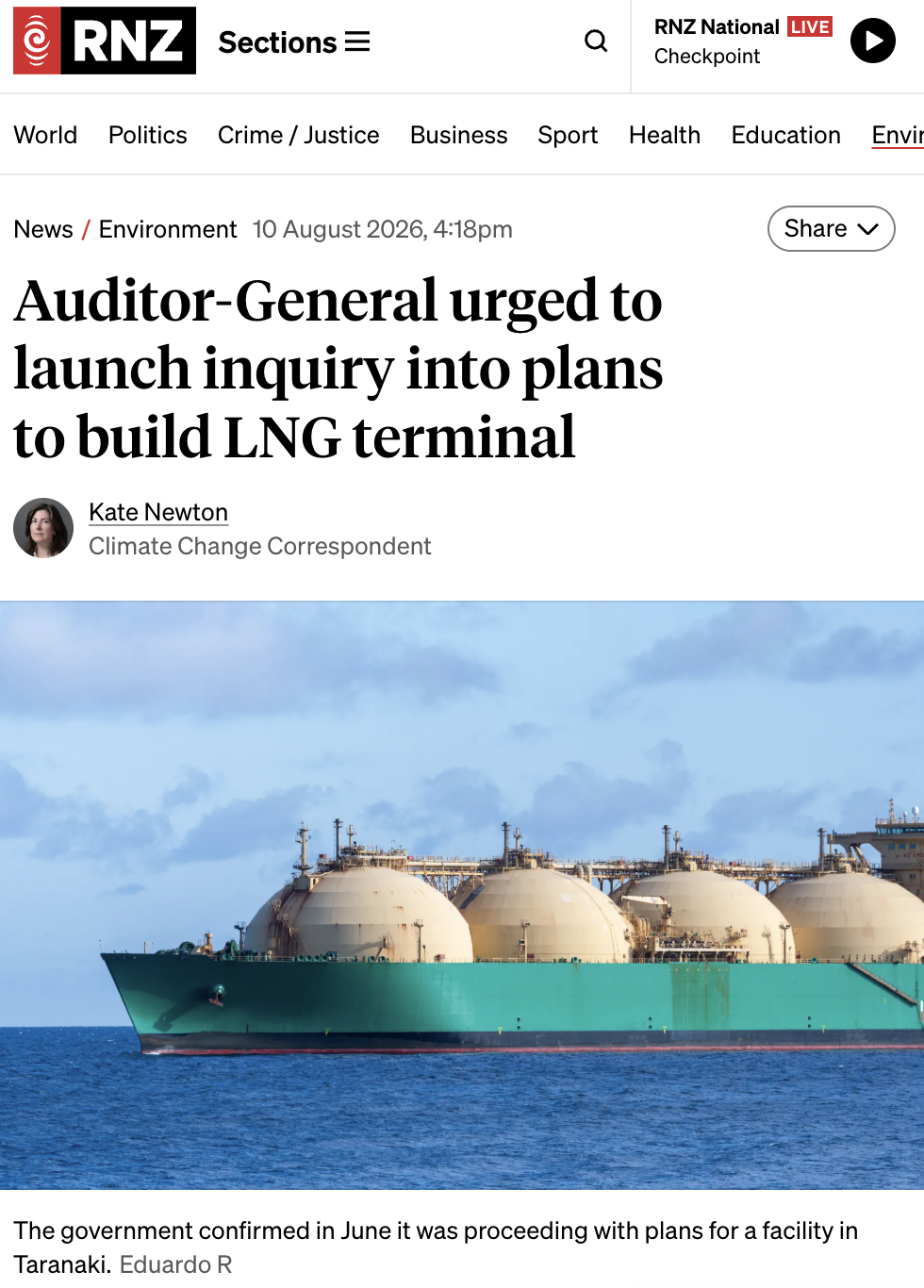
Read RNZ’s reporting of the letter here.