
Op-Ed: New Year, New Opportunity for the Climate
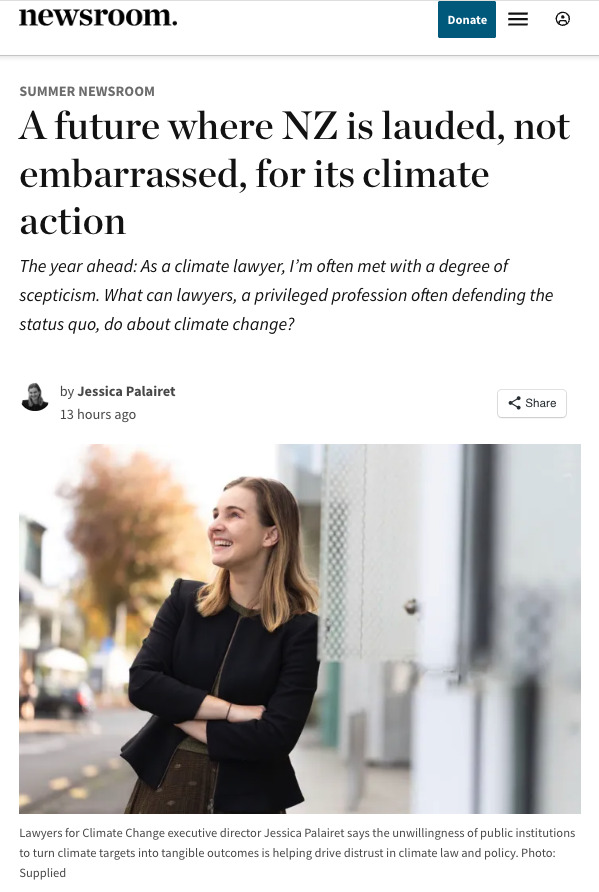
Our Executive Director, Jessica Palairet, was asked by Newsroom to share her hopes for 2026 as part of their series featuring New Zealand thought-leaders.
2025 saw some strong legal judgments on climate, including from New Zealand's Supreme Court and the International Court of Justice, but also significant rollbacks in climate action and law in Aotearoa New Zealand.
The government cut climate policy after climate policy – from transport, to our domestic 2050 methane target, to companies’ emissions reporting obligations. For much of the year, it felt like the Government was more focused on reducing litigation risk than reducing emissions.
In 2026, we need to do better.
Meeting our climate targets requires more than mere assertions of commitment: it requires credible plans that are capable of achieving our targets.
Part of the problem is that the Government appears to view our climate obligations as an area where we should do as little as we think we can get away with. We need stronger climate targets, but what we also need – and what’s missing globally – is the willingness and ability of public institutions to turn those targets into tangible outcomes.
In March 2026, we’re taking the Government to the High Court, challenging whether their emissions reduction plan actually complies with the law. In our view, the plan is high-risk and overly reliant on planting thousands of hectares of pine trees across the South Island, when it should be focused on reducing emissions at source. In our view, this tree-planting frenzy is not only unlawful, it’s unpopular among climate advocates, scientists, and sceptics alike.
In the article, Jessica argues that the Government should treat our climate targets as strategic economic roadmaps for the future - turning our targets into tangible outcomes, like cheaper electricity and better transport options. Climate action is economically compelling. Honouring our legal climate obligations doesn't have to come at the expense of our economic interests; it can, and should, support them.